
The Key to a Great Family Garden — 7 Design Tips

A St Albans Family Garden
Designing a family garden is about far more than fitting in play equipment or creating something that looks good in the first summer.
Over the years, I’ve noticed that many family gardens struggle not because they were poorly built — but because they were over-designed. There is a definite trend to fit as many features as possible into a garden, chosen without consideration, often adding cost, increasing maintenance, and complexity without delivering long-term value.
A great family garden is one that works quietly in the background. It supports everyday life, adapts as children grow, and still feels calm and enjoyable for the adults who live there.
Based on more than 20 years of designing family gardens, here are the seven principles you should consider.
1. Design for the Whole Family — Not Just the Children
A family garden shouldn’t become a space that only works for children.
While play is important, adults need somewhere they genuinely want to spend time too. In practice, that means a proper entertaining space:
a simple BBQ setup
a small work surface to keep dining tables clear
seating for 6–8 adults
and a comfortable sofa, not just dining chairs
When children have playdates, parents often end up entertaining other parents — and these moments frequently become friendships that last for years. A garden that supports this social side of family life gets used far more often than one designed purely around play.
As children grow older, this same space naturally becomes the main social hub — proof that good design works across life stages.

A Simple BBQ Set-Up with Komodo Joe BBQ and Work Surfaces
2. Start with Real Life, Not Aspirations
One of the most common mistakes in family garden design is planning for an ideal lifestyle rather than reality.
Most families don’t use their gardens primarily for large gatherings or special occasions. Around 80% of garden use comes from everyday moments:
stepping outside with a plate of food and a drink
sitting with a coffee to get some air and quiet away from screens
children playing while adults relax nearby
When a garden is designed around this everyday use first, it feels effortless. You don’t need to plan to use it — it simply becomes part of daily life.
Aspirational features can come later, once the basics are working well.
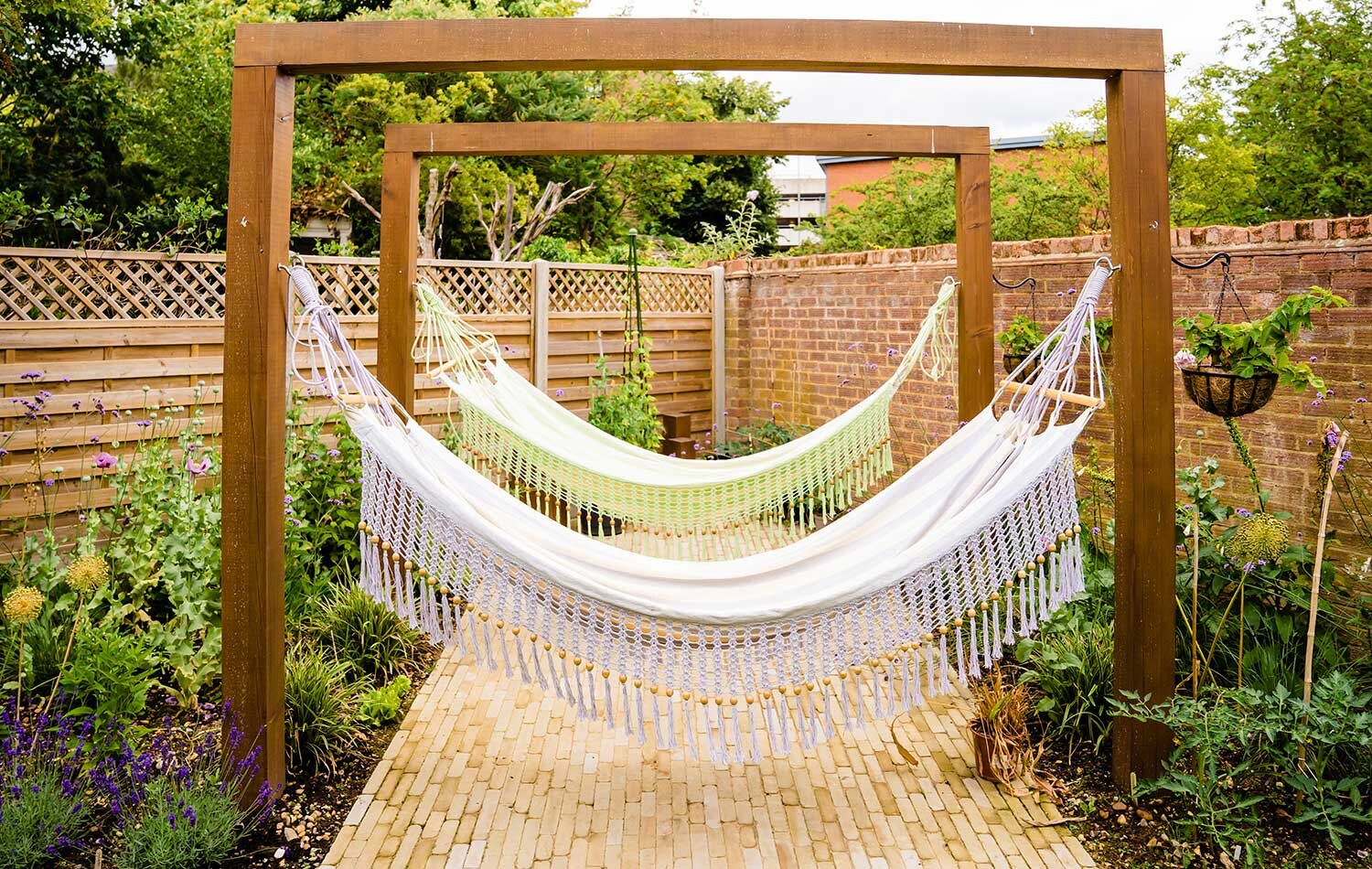
Hammocks for Adults and Children to Relax
3. Build in Low Maintenance from Day One
Time is the real luxury for families.
A well-designed family garden should reduce pressure, not add to it. That’s why low maintenance isn’t an afterthought — it’s a design decision.
This often means:
lawns with clean edges so they can be cut easily
minimal need for strimming
simple, reliable planting
bark-mulched borders to keep weeds under control
When life gets busy with work, school runs, and activities, the garden should still feel manageable. Good design considers not just how a garden looks — but how it feels to live with on a busy weekday evening.

Craig doing a spot of maintenance in the garden.
4. Keep Play Flexible, Not Permanent
Children’s interests change quickly, and gardens should be able to change with them.
In my experience, trampolines are one of the most consistently used pieces of play equipment. Sunken trampolines work particularly well:
they’re visually less imposing
they’re safer
and they can be removed later with minimal disruption
Once removed, the space can be reclaimed with planting or seating — without major groundwork.
Permanent structures often become redundant, while flexible solutions allow the garden to evolve naturally.
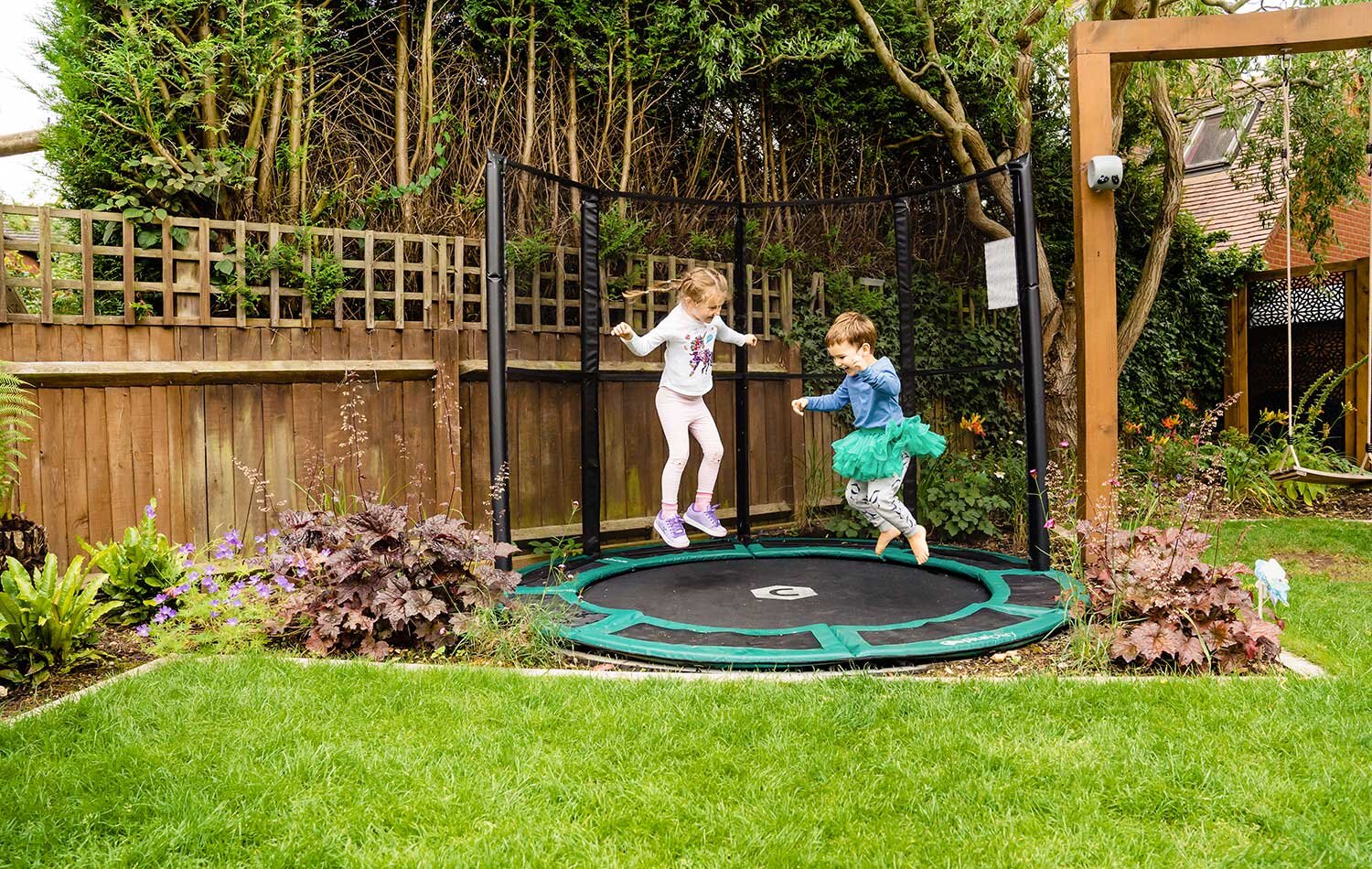
A Sunken Trampoline is a popular option, placed in flower border so it can be replaced with planting once outgrown.
5. Choose Play Features That Earn Their Space
Every element in a family garden should justify the space it takes.
Features that tend to work well over time include:
trampolines
swings
football goals
temporary summer pools
These encourage shared play, movement, and flexibility without dominating the garden permanently.
By contrast, playhouses often feel exciting at first but quickly lose their appeal, while still taking up valuable space. Good design isn’t about saying no — it’s about choosing carefully.

Arches are features but support swings, hammocks and a water feature.
6. Introduce Water Carefully — for Interaction, Not Risk
Children are naturally drawn to water, and when designed correctly it can add play, curiosity, and calm to a family garden.
Recirculating water features often work best, encouraging interaction without introducing unnecessary risk. Safety should always come first:
shallow designs
no stagnant water
controllable systems
When done well, water becomes something children return to again and again — while also adding movement and atmosphere for adults.

Rain curtain water feature for children to play in during the summer.
7. Design for the Next Chapter, Not Just This One
The most successful family gardens are designed with the future in mind.
Play areas don’t need to disappear overnight — they simply need to be adaptable. Lawns can become seating areas, planting can reclaim former play zones, and features can be removed without leaving scars.
A great family garden isn’t just child-friendly — it’s future-friendly. It evolves as family life changes, without needing to be redesigned every few years.
In Summary
The best family gardens aren’t the most elaborate or expensive. They’re the ones that quietly support everyday life, adapt over time, and remain enjoyable for everyone who lives there.
Design for how you live now.
Allow space for how you might live later.
And keep things simple, flexible, and thoughtful.
That’s how family gardens stand the test of time.
