
What l’ve Learned Designing Gardens for Over 20 Years
A Practical Guide to Designing a Garden That Lasts
A practical, design-led guide to creating a beautiful, low-maintenance garden that stands the test of time.
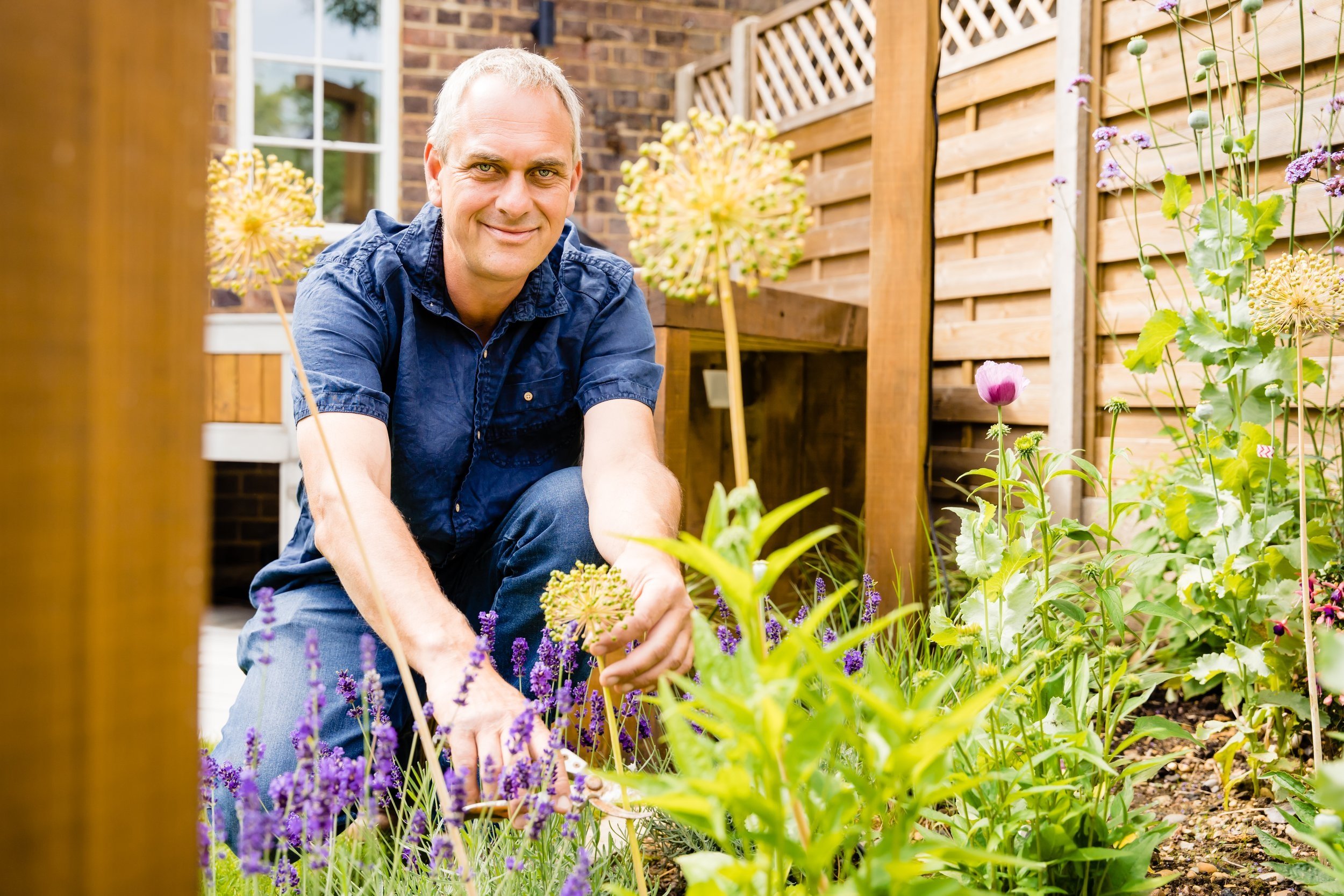
Me doing a little bit of maintenance in a clients garden
Introduction
Over the past twenty years, I’ve designed and built gardens for a wide range of people — families, professionals, retirees, and everyone in between. Some projects have been large, others modest. Some gardens were complex, others deceptively simple. But the most important lessons I’ve learned haven’t come from size, budget, or trends — they’ve come from how people actually live with their gardens over time.
A garden that looks good in its first summer isn’t necessarily a successful one. The gardens that truly work are those that still feel right years later — spaces that are easy to live with, age gracefully, and quietly improve everyday life.
That’s why I’ve become increasingly thoughtful about what I recommend and what I choose not to include. Good garden design isn’t about adding more features; it’s about making better decisions. Decisions rooted in observation, experience, and an understanding of how spaces are really used.
I often encourage clients to slow the process down at the very beginning — to notice where they naturally sit, how the light moves through the garden, what frustrates them when they step outside, and what they’re hoping the space will give them emotionally, not just visually. These early conversations shape everything that follows.
This article brings together the core principles I return to on every project. They aren’t trends, rules, or rigid formulas — they’re practical insights learned over time, refined through experience, and tested in real gardens.
If you’re thinking about redesigning your garden, my hope is that this guide helps you ask better questions, avoid costly mistakes, and create a space that feels calm, purposeful, and lasting.
What 20 Years of Garden Design Has Taught Me
Why Professional Landscaping Transforms Homes and Lifestyles
I’ve seen, time and time again, how dramatically a garden transformation changes the way people live. Before we begin a project, many clients tell me they feel embarrassed by their garden. It’s the place they ignore, the place they walk past quickly, the space they rarely step into unless absolutely necessary.
After the transformation, something remarkable happens:
They reclaim an entire extra room of their home.
Suddenly, the garden becomes the backdrop to family breakfasts, evening drinks, children exploring, and quiet moments of breathing space after a long day. They spend more time outdoors, connect more deeply with nature, and enjoy a healthier, calmer rhythm at home.
One client put it perfectly:
“I am absolutely delighted with my garden — it has completely transformed our lives. I asked Craig to help the house and garden feel connected, with a design that was child-friendly with space for dining, and he has done that and so much more. He has created something I never could have imagined — both beautiful and flexible — from eating and entertaining to relaxing or exploring and playing with my son. Working with Craig and his team has been a pleasure — they are professional, punctual, really responsive, and work to a very high standard.”
That is the true power of landscaping.
It’s not just about building patios or planting borders — it’s about redesigning how a family experiences their home every single day.
Whether you dream of an outdoor living area where you can entertain, a tranquil spot to unwind, or a beautiful garden full of texture, movement, and colour, thoughtful landscaping can change everything. It adds value to your home, simplifies maintenance, and creates a sanctuary you’ll enjoy for years to come.
In this guide, I’ll share 10 stunning landscaping ideas that I regularly use to transform gardens — ideas inspired by real projects, real challenges, and real families whose spaces now feel like an extension of the home. If you’re planning your own garden makeover, these concepts will help you visualise what’s possible and clarify what truly matters in your outdoor sanctuary.
Let’s explore how to bring your dream garden to life.

Simplicity and beauty
1. Understanding Your Garden’s Natural Features
Before you start choosing materials, colours, planting palettes or furniture, the most powerful thing you can do is pause… and simply observe your garden as it is today. Every outdoor space has a unique rhythm — a combination of sunlight, shade, soil, levels, and movement that quietly shape what will thrive, what will struggle, and how the space naturally wants to be used.
Understanding these features is the foundation of great landscaping. It’s also where many homeowners skip ahead, jumping into purchasing without noticing the clues the garden is giving them.
🌞 Follow the Sunlight
Every garden has its own light map. Notice:
where the early morning sun lands
where the long afternoon warmth gathers
which areas stay shaded
how light moves through the seasons
If your garden faces southwest, you’ll benefit from long afternoon and evening light — something I see homeowners really appreciate during Hertfordshire summers. It’s often the ideal location for a dining terrace or lounge area.
And here’s a simple but extremely useful tip:
📸 Take Photographs as a Record
Take photos of your garden at three points during the day:
morning
afternoon
early evening
These images create a visual log that helps you — and any designer or landscaper — understand how your garden behaves. Shadows, hotspots, cool areas, reflections, and natural “resting spots” become crystal clear when seen through photos rather than memory.
Clients are often surprised at what these images reveal.
🌧️ Soil, Moisture & Drainage
Soil type shapes everything: plant choices, drainage, and even the hard landscaping materials that will stand the test of time.
Clay: holds water; needs robust, water-tolerant planting.
Sandy: drains quickly; ideal for drought-resistant plants.
Chalky: common in parts of Hertfordshire; suits Mediterranean-style planting and grasses.
Good design works with your existing soil — not against it — saving money, maintenance, and frustration.
🧭 Levels, Slopes & Natural Movement
Most gardens aren’t perfectly flat — and that’s a blessing.
Levels create interest, drama, and opportunities:
terraced lawns
layered planting
retaining walls
wide, elegant steps
multi-zone layouts
A sloped garden doesn’t have to be “fixed” — it can be transformed into the most characterful space in your home.
🌿 Microclimates & Sheltered Areas
Every garden contains subtle microclimates:
a warm, sheltered nook
a breezy channel
deep shade beneath trees
sun-baked areas beside reflective walls
Use these pockets wisely:
Warm corners suit lounge seating; breezy zones benefit from shade structures; shady spots become tranquil woodland retreats.
These small nuances often dictate where your favourite garden moments will happen.
🍃 How You Already Use the Space
One of the most overlooked aspects of garden design is how you currently interact with your garden.
Ask yourself:
Where do you naturally walk?
Where do you stop or linger?
Which areas feel ignored?
What bothers you every time you step outside?
These clues help determine circulation, planting placement, and feature positioning.
📌 Your Garden Always Tells the Truth
A truly great garden isn’t imposed — it’s revealed.
When you understand your garden’s natural features, you unlock its potential: the warm evening terrace, the cool morning coffee spot, the playful family lawn, the hidden sanctuary for reading or reflection.
And once you understand the space…
That’s when the transformational landscaping ideas begin to take shape.
2. Create Structure Before Decoration
Great gardens aren’t decorated — they’re structured.
Evergreen form, trees, and architectural planting create year-round presence. Seasonal colour then becomes an enhancement rather than a dependency.
If a garden only looks good when everything is in flower, it hasn’t been designed — it’s been dressed.
3. Plants Add Character — Don’t Be Scared of Them
Plants are the soul of a garden.
They give it character, movement, softness, and life. They introduce focal points, shifting colour, texture, and a rhythm that changes not just through the seasons — but through the years.
Yet planting is often the part people feel most anxious about.
“I don’t want to kill anything.”
“I don’t know what to do, or when.”
“I’m worried it’ll be high maintenance.”
Ironically, the feature that causes the most concern is usually less work than a lawn — and far more rewarding.
🌱 Planting Isn’t High Maintenance — Uncertainty Is
Most fear around planting doesn’t come from the plants themselves — it comes from not knowing:
what to plant
where to plant it
how it will develop over time
when (or if) it needs attention
When the right plant is chosen for the right place, maintenance drops dramatically. Plants thrive rather than struggle, becoming resilient, forgiving, and quietly reliable.
And if something doesn’t succeed?
Good design uses plants that are easy to replace, not precious specimens that leave a permanent gap.
🍁 Where I Often Start: The Acer Tree
Many of my designs begin with a simple question:
Where would an Acer tree sit best?
I have a genuine love for Acers. They’re ideal for small and medium gardens — elegant without being overpowering. Their seasonal journey is one of the great pleasures in a garden:
fresh buds in spring
delicate foliage in summer
rich reds and oranges in autumn
bare, sculptural form in winter
They naturally create a focal point and bring calm and balance to a space. I try to include one in almost every garden — and I’m probably running at around an 80% success rate.

I do love an Acer tree
🌸 Underplanting: Colour, Contrast & Movement
Beneath the Acer, I’ll often introduce underplanting that contrasts beautifully with its form and colour:
Heuchera for bold, rich foliage
Grasses for softness and movement
These layers create depth without clutter.
To anchor the planting, I often introduce simple topiary structure, using varieties such as Euonymus ‘Green Spire’ — a reliable, modern alternative to box, which sadly suffers too much from blight to be dependable long-term.
🌿 Why Lush Planting Matters More Than You Think
One of the most overlooked benefits of planting is how effectively it softens hard landscaping.
Stone, porcelain, concrete, and steel are all beautiful materials — but without planting, they can feel cold, rigid, or overpowering. Lush planting:
softens hard edges
lifts the overall colour palette
introduces movement through wind and seasonal change
adds depth and atmosphere
creates a more welcoming, human feel
Planting also brings the garden to life. Bees, butterflies, birds, and other wildlife are naturally drawn to layered, diverse planting — creating a garden that feels alive rather than static.
And there’s a practical benefit many people don’t realise:
Planting is far more cost-effective than hard landscaping.
A generous planting scheme can dramatically elevate a space without the expense of additional paving, walls, or structures. It’s often the most economical way to add richness, softness, and value to a garden.
🐝 Reliable Plants That Just Get On With It
There are certain plants I return to again and again — not because they’re fashionable, but because they work.
Scabiosa ‘Blue Butterfly’
Flowers for an astonishingly long time and attracts pollinators continuously.Salvia
Strong vertical structure and a magnet for bees and butterflies.Geraniums
Free-flowering, ground-covering, and excellent for wildlife.Gaura (Whirling Butterflies)
Light, airy flowers that dance in the breeze — like little fairies floating above the planting.
These plants are generous. They give far more than they demand.
Often, these areas become stylised focal points, finished with bark mulch, cobbles, or feature rocks to keep the look calm, intentional, and low maintenance.
🌾 Softening the Garden Elsewhere
Not every border needs to shout for attention.
Away from focal areas, planting often becomes softer and more relaxed — echoing elements used elsewhere in the garden.
Here I’ll lean on:
Pennisetum ‘Hameln’
Rudbeckia
Verbena bonariensis
Ferns
Geraniums
These plants provide movement, seasonal interest, and wildlife value, while requiring little more than a tidy-up once a year.
🌿 Climbers: Choose Carefully
For vertical planting, I’m selective:
Trachelospermum jasminoides for fragrance
Honeysuckle for scent and wildlife
Climbing hydrangea for shaded areas
I tend to avoid climbing roses — often harder to maintain than expected — and while clematis can be beautiful, many varieties look scrappy for much of the year.
🌸 Why I Use Very Few Shrubs
You may have noticed something: there aren’t many shrubs in this palette — and that’s deliberate.
Shrubs rely on regular, thoughtful pruning. In reality, this is often neglected, leaving them oversized and untidy, particularly in smaller gardens.
When I do use shrubs, I keep it simple and reliable:
Hydrangea ‘Annabelle’
Hydrangea ‘Limelight’
Both are generous, forgiving, and rewarding.
🍂 Finish the Borders Properly
Whatever planting you choose, always finish borders with bark mulch or decorative aggregates. This suppresses weeds, retains moisture, and gives the garden a calm, finished feel.
It’s one of the simplest steps you can take — and one of the most effective.
✨ If You Ask Me…
Planting shouldn’t intimidate you — it should invite you in.
When chosen thoughtfully, it reduces maintenance, softens hard landscaping, supports wildlife, and gives your garden a personality that paving alone never can.
A garden without plants feels empty.
A garden designed around them feels alive.

Path softened with the pink geraniums creeping over the edge
4. Introduce Water — Movement, Sound and Life
There are few elements in a garden as powerful as water.
It brings movement where everything else is still.
Sound where the world feels noisy.
Life where there was once only space.
I’ve always loved water in the garden — in all its forms. From large koi ponds with cascading waterfalls, to quiet, reflective wildlife ponds alive with frogs, newts and dragonflies, to subtle, pondless water features that add atmosphere without dominating the space.
Water has an almost instinctive pull on us. We’re drawn to it without quite knowing why.
🌊 From Grand Statements to Quiet Presence
Water features don’t need to be dramatic to be effective — but they can be, if the garden allows.
At one end of the spectrum are large ponds with cascades, often home to koi or other fish. These become the emotional heart of a garden. I’ve watched clients spend hours simply sitting, feeding fish, watching them glide through the water, play in the shallows, or disappear into the depths before re-emerging beneath a waterfall.
It’s hypnotic.
And deeply calming.
At the other end are still, serene nature ponds, designed primarily for wildlife. These are quieter spaces — reflective, understated, and rich with life. Over time, they attract frogs, newts, dragonflies and birds, subtly changing with the seasons.
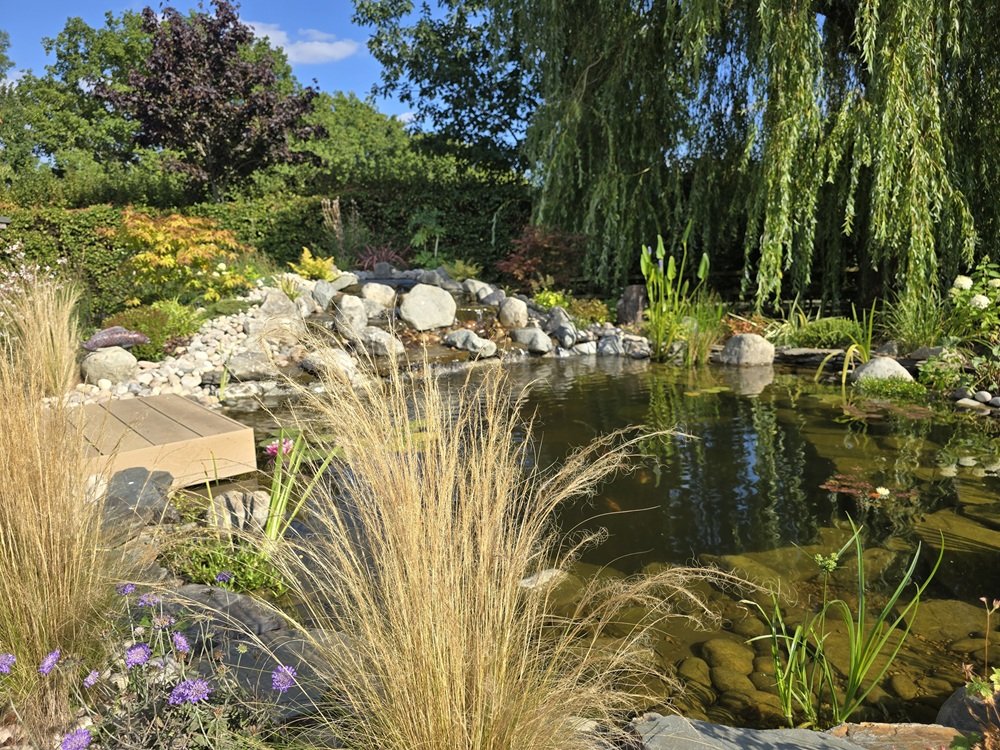
Large Koi pond with cascade
And in between sit pondless waterfalls and sculptural water features — perfect for smaller gardens or seating areas, where the sound of trickling water adds movement and softness without the commitment of a full pond.
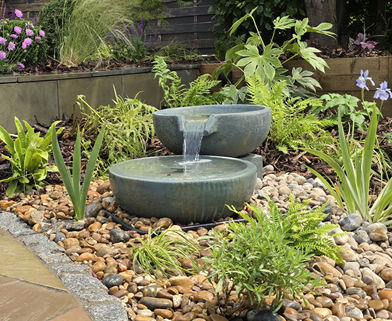
Aquascape Cascading Bowls Water Feature
📖 A Garden That Changed the Way I Think About Water
One of the most memorable gardens I’ve ever encountered — in a book, rather than in person — completely flipped the script.
The entire garden was a pond.
Small islands emerged from the water, forming seating areas and borders, connected by subtle pathways. The landscape wasn’t placed around the water — it was defined by it.
It was extreme.
Impractical for most.
And utterly unforgettable.
While few clients want to go that far, the idea stayed with me:
water doesn’t have to be an add-on — it can be the framework of a garden.
🎵 Sound, Movement & Calm
Even a simple water feature can completely change how a garden feels.
Positioned near a seating area, the sound of moving water:
softens background noise
creates a sense of privacy
slows the pace of the space
adds a meditative quality to the garden
Water also introduces constant, gentle movement — catching light, reflecting planting, and changing character throughout the day.
It’s one of the most effective ways to make a garden feel alive.
🐟 Fish Ponds: Relaxation with Responsibility
A pond with fish offers something few other garden features can: a relationship.
Watching fish grow, feed, explore, and interact with flowing water creates a connection to nature that’s hard to replicate. For many clients, it becomes a daily ritual — morning feeding, evening observation, quiet moments of reflection.
Yes, fish ponds require maintenance.
But that’s part of their charm.
Caring for the water, monitoring clarity, maintaining pumps and filters — it draws you into the natural rhythms of the garden rather than distancing you from them.
🐸 A Magnet for Wildlife
Any form of water will attract life.
frogs and newts
dragonflies and damselflies
birds bathing and drinking
beneficial insects
In a well-designed garden, water becomes an ecological anchor — supporting biodiversity while enriching the experience of the space.
⚖️ Maintenance: Part of the Pleasure
Water features do require care — but when designed properly, that care is manageable and rewarding.
A pondless feature offers low intervention.
A wildlife pond requires seasonal attention.
A koi pond needs commitment and consistency.
The key is choosing the right type of water feature for your lifestyle, not just what looks good in a photograph.
✨ If You Ask Me…
If you want one feature that instantly adds calm, atmosphere and a sense of life to your garden — introduce water.
It doesn’t have to be large.
It doesn’t have to be complex.
But it should feel intentional.
A garden with water always feels richer than one without.
5. Design Outdoor Living Spaces That Truly Get Used
One of the biggest mistakes I see in garden design isn’t poor materials or planting — it’s designing for a lifestyle that doesn’t really exist.
Before thinking about pergolas, outdoor kitchens, or feature furniture, I always encourage clients to ask a much simpler question:
How do we actually use our garden right now — and what do we genuinely need from it?
When you answer that honestly, the design becomes far clearer.
🧭 Start with Real Life, Not Aspirations
Every successful outdoor living space begins with understanding day-to-day use.
Ask yourself:
How do we move through the garden as a family?
Where do we naturally step out from the house?
What do we do outside in ordinary moments — not special occasions?
For most families, around 80% of garden use comes from simple, everyday activities:
stepping outside with a plate of food and a drink
sitting with a coffee to get fresh air and quiet away from screens
children playing on the lawn, a trampoline, or needing a small chill-out space
practical needs like storage, access, and circulation
Designing for this 80% first ensures the garden works effortlessly, without thought or planning.
☕ The Small Moments Matter Most
Some of the most-used spaces in a garden are also the simplest.
A chair positioned for morning light.
A bench tucked away from noise.
A small terrace just outside the kitchen door.
These aren’t grand gestures — they’re daily rituals. And when designed well, they get used far more than large, formal entertaining spaces.
🧺 Storage, Space & Decluttering
It’s not glamorous, but it’s essential.
Before adding features, it’s worth asking:
What storage do we really need?
Could we declutter instead of building bigger?
Does the shed need to be as large as it is?
Practical clarity here often frees up space for living, rather than swallowing it with buildings and structures.
✨ The Other 20%: Aspirations
Once the everyday use is defined, you can consider the aspirational elements — the features we love the idea of:
larger entertaining areas
outdoor kitchens or pizza ovens
hot tubs or Jacuzzis
summer houses
These can be wonderful additions — if they’re used regularly enough to justify the cost, space, and maintenance.
I always encourage clients to pause and ask:
Will we genuinely use this — or do we just like the idea of it?
There’s no right or wrong answer — only an honest one.
🪑 Smaller, Intimate, and Multi-Functional
In many gardens, smaller, well-considered spaces outperform larger, rigid ones.
A compact area that allows you to:
eat with a few friends on a Friday night
pull chairs around a table for a BBQ
relax on a sofa at the end of the evening
Add a small water feature, gentle lighting, and generous planting — and you’ve created something beautiful, flexible, and easy to live with.
No fuss.
No over-design.
Just a space that works.
🕰️ Good Design Doesn’t Date
I’ve always been a fan of Habitat furniture. In fact, I still own two pieces I bought around 25 years ago — and they look as relevant today as they did then.
That’s good design.
Simplicity.
Clean lines.
A touch of elegance.
When applied to gardens, these principles create outdoor spaces that don’t chase trends — they age gracefully, growing better as the years pass.
✨ If You Ask Me…
The best outdoor living spaces aren’t the biggest or the most expensive — they’re the ones you step into without thinking.
Design for how you live now.
Allow space for how you might live later.
And keep things simple, flexible, and human.
That’s how gardens become part of everyday life — not just something you admire from the kitchen window.
6. Plants for Low-Maintenance Gardens
When clients tell me they want a low-maintenance garden, I often start by gently reframing the conversation.
Because the truth is this:
Your highest-maintenance garden feature should be your lawn.
Not your plants.
🌾 The Reality of Garden Maintenance
A typical garden maintenance hierarchy looks like this:
The lawn
Regular cutting throughout the growing season, plus edging, weeding, feeding, scarifying, aeration and repairs.Hard landscaping
Keeping paving and terraces clean — usually no more than a brush, warm soapy water and a hose.Plant care
And this is where many people get it wrong.
Planting is often feared as “high maintenance,” when in reality, it should be the most enjoyable part of caring for your garden.
🌼 Plant Care Should Be a Pleasure, Not a Chore
Looking after plants shouldn’t feel like a big job reserved for a single exhausting weekend.
Low-maintenance planting works best when care is spread gently over time — a little and often approach:
wandering around the garden with a coffee
pulling the odd weed
guiding a climber shoot onto its frame
dead-heading flowers as you pass
one or two intentional seasonal prunes each year
This kind of “pottering” connects you to the garden rather than burdening you with it.
Topping up bark mulch or decorative aggregates once a year also makes a huge difference — suppressing weeds, retaining moisture, and keeping borders calm and tidy.
🌳 Choosing the Right Plants Makes All the Difference
Low maintenance doesn’t mean boring.
It means choosing plants that behave well, suit the space, and don’t demand constant intervention.
Here are some of my go-to plants for low-maintenance gardens.
🍁 Small Acer Trees (e.g. Sango-kaku)
I often start with a small Acer, particularly varieties like Sango-kaku.
Beautiful foliage that changes colour through the seasons
Striking red and green stems in winter
Bare, sculptural form when leaves fall
Limited ultimate height — ideal for smaller gardens
They bring year-round interest without overwhelming the space or requiring regular pruning.
🌿 Euonymus ‘Green Spire’
For structure, hedging, or topiary forms, Euonymus ‘Green Spire’ is a favourite.
Simple evergreen habit
Easy to control and shape
Responds well to light pruning
A reliable alternative to box, without the blight issues
Used sparingly, it adds calm structure without creating maintenance headaches.
🌾 Ornamental Grasses
Grasses are one of the most under-appreciated low-maintenance plants.
Two reliable choices I use regularly:
Carex ‘Ice Queen’ — great for contrast and year-round presence
Pennisetum ‘Hameln’ — soft, structural, and full of movement
Maintenance is usually no more than a single tidy-up once a year.
🌸 Heuchera (for Foliage, Not Flowers)
Heuchera are brilliant low-growing plants used for their foliage, not their flowers.
Wide range of colours
Happy in sun or shade
Excellent ground coverage
Minimal intervention
They lift the colour palette of a garden without demanding attention.
🌸 Verbena bonariensis
Tall, light, and airy
Adds height without heaviness
“Floaty” flowers that weave through other planting
Excellent for pollinators
Creates movement and softness without blocking views
You like how it adds vertical interest while still feeling informal and relaxed.
🌼 Hydrangea ‘Annabelle’ & ‘Limelight’
Generous, showy blooms that make an impact
Surprisingly easy to maintain
Happy in sun or partial shade
Simple annual prune — no complicated regimes
These are among the very few shrubs you regularly use, because they reward neglect rather than punish it.
🌻 Rudbeckia
Bold, golden flowers
Long flowering period
Creates warmth and colour late in the season
Reliable and robust
You value how it lifts a border visually without adding complexity.
🌿 Ferns
Strong architectural form
Perfect for shaded or awkward areas
Bring calm, texture, and structure
Low maintenance once established
You love their sculptural quality and how they soften darker areas of the garden where other plants struggle.
🌿 Low Maintenance Is About Behaviour, Not Neglect
A low-maintenance garden isn’t one you ignore — it’s one that forgives you.
Plants that are well chosen will tolerate missed weeks, changing seasons, and real life getting in the way. They grow into their space rather than fighting it.
When planting is designed properly, care becomes part of the enjoyment — not a task to dread.
✨ If You Ask Me…
If you want a low-maintenance garden, don’t remove planting — choose better plants.
Let your lawn do the hard work.
Let your paving stay simple to clean.
And let your planting become something you quietly enjoy, one small moment at a time.
That’s when a garden truly looks after you.
7. Garden Lighting — Essential, but Not Always for the Reasons You Think
If you ask me…
Garden lighting is essential — but not always for the reasons people expect.
Lighting is often sold as a way to “extend evenings outdoors,” but in reality, how and why you use lighting in a UK garden needs a little more thought. Done well, it enhances safety, atmosphere, and enjoyment. Done badly, it overwhelms the space and ruins the calm you’re trying to create.
🚶 When Garden Lighting Is Essential
There are situations where lighting isn’t optional — it’s necessary.
Poorly lit front gardens need lighting for safety, security, and confidence when arriving home after dark.
Paths used year-round, especially routes between a garden office and the house in winter, should always be illuminated.
Steps, level changes, and transitions must be visible to avoid trips and falls.
In these cases, lighting isn’t about mood — it’s about function and reassurance.
Subtle, low-level lighting that guides movement is far more effective than bright fittings that shout for attention.
🌙 Lighting as a Finishing Touch, Not a Requirement
When it comes to summer evenings in the UK, lighting plays a different role.
If it’s warm enough to sit outside, you’re often enjoying natural twilight well into the evening. In these moments, lighting becomes a luxury rather than a necessity — something that enhances the experience rather than defines it.
This is where restraint matters.
Lighting should:
highlight feature planting
pick out texture and form
reflect softly on water
create pools of light rather than blanket brightness
A single uplighted tree, a softly lit water feature, or gentle illumination near seating can completely change the mood of a garden — without overpowering it.
🌿 Light What You Want to Feel, Not Everything You Can See
One of the most common mistakes is trying to light everything.
In reality, the most beautiful gardens at night are those where light is used selectively:
to frame views
to draw the eye
to create depth and mystery
Darkness is as important as light. Shadow gives contrast, softness, and calm.
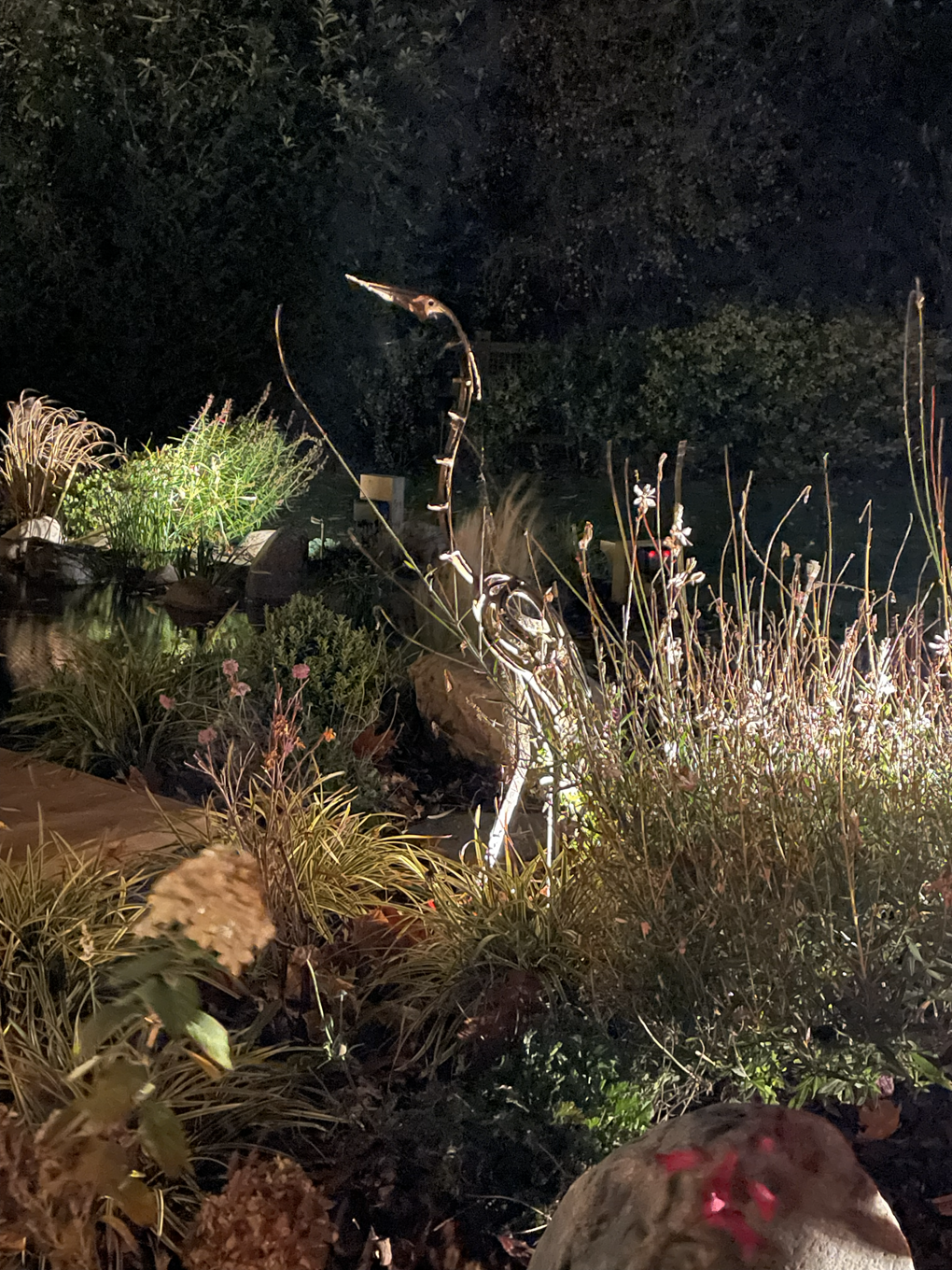
Uplighting this heron sculpture is simply beautiful at night
🔌 Keep It Simple and Sustainable
Modern garden lighting doesn’t need to be complicated.
Low-voltage systems are efficient and flexible
Timers and sensors reduce energy use
Warm colour temperatures feel natural and inviting
Good lighting should quietly do its job — not demand attention or constant adjustment.
✨ If You Ask Me…
Light your garden where safety demands it.
Add lighting where atmosphere enhances it.
And leave the rest in darkness.
When used thoughtfully, garden lighting doesn’t just illuminate a space — it elevates how it feels.
8. Paths, Movement & Natural Flow
A well-designed garden isn’t just something you look at — it’s something you move through.
In my experience, garden layouts are often shaped by three key considerations:
Where people want to sit
What they want to look at from the house
How they naturally move through the space
That third point is frequently overlooked — yet it has a huge impact on how a garden feels and functions.
🧠 People Move Efficiently — Design Should Respect That
Human behaviour is wonderfully predictable.
People like to move in straight, economical lines.
They’ll cut a corner.
They’ll walk diagonally across grass.
They’ll ignore a meandering path if it doesn’t feel logical.
This isn’t a failure of design — it’s a cue.
If people are constantly walking off the path, the path is in the wrong place.
Good garden design works with natural movement patterns, not against them.
❓ Do You Actually Need a Path?
One of the most useful questions I ask clients is:
Why do you want a path down your garden?
If the answer is simply “to get to the shed”, I’d usually challenge that.
In reality, most people don’t visit their shed often enough — especially in poor weather — to justify a permanent path cutting through the garden. Pull on a pair of old shoes and walk across the lawn; the garden doesn’t need to be treated like a corridor.
There’s also a strong visual reason to be cautious.
A path running down the length of a garden often splits the space, creating a strong linear line that draws the eye straight to the boundary. This can make a garden feel artificially narrower and longer, particularly in smaller or long, thin plots.
By avoiding unnecessary paths, you allow the garden to read as one continuous, open space — wider, calmer, and more generous in feel.
✅ When a Path Does Make Sense
There are situations where a permanent path is absolutely the right decision:
access to a home office or garden gym
a rear parking area or garage
a regularly used secondary entrance or exit
year-round circulation that needs to cope with wet or muddy conditions
In these cases, I’d always recommend a full, comfortable path rather than awkward stepping stones. Continuous paths feel easier, safer, and more natural to walk — especially in winter.
Stepping stones may look charming, but they often interrupt movement rather than support it.
🪜 Steps: Encourage Movement, Don’t Restrict It
Where gardens involve changes in level, steps become more than a practical necessity — they’re an invitation.
Narrow steps tend to do the opposite.
They create a sense of restriction.
They subconsciously tell people to stop.
Wide steps, on the other hand:
feel generous and relaxed
encourage exploration
make transitions feel effortless
visually open up the garden
Good tread depth and gentle riser heights make movement comfortable for everyone — from children to guests carrying drinks.
Wide steps don’t just move you through a garden — they draw you into it.

~Wide steps and low terracing invite you into the garden
🌿 Designing for Flow Creates Calm
When circulation works well, the garden feels intuitive.
You don’t think about where to walk — you just do.
Paths, terraces, and steps should feel obvious without being dominant, guiding movement quietly while allowing planting, views, and focal points to take centre stage.
This is where gardens begin to feel calm, natural, and easy to live with.
✨ If You Ask Me…
If you want a garden that feels effortless, don’t start with paths — start with people.
Understand how you move, where you go, and why.
Then design circulation that supports that behaviour rather than fighting it.
When movement flows naturally, everything else falls into place.
9. Use Levels and Zones — With Care
Levels can be one of the most powerful tools in garden design — and one of the most misunderstood.
I’ve always had mixed feelings about levelling gardens, because whether it’s the right decision depends entirely on scale, context, and intent. Used thoughtfully, changes in level can unlock space, create interest, and define zones. Used carelessly, they can introduce unnecessary cost, complexity, and long-term issues.
📐 When Levelling a Garden Makes Sense
In small sloping gardens, subtle changes in level can be incredibly effective.
Creating one or two modest terraces can:
make the space far more usable
improve how furniture sits
introduce visual interest
naturally define different zones
In these situations, level changes are usually minimal — often just a few hundred millimetres — which reduces the risk of disrupting natural soil structure and existing drainage patterns. Done well, it can feel intuitive rather than engineered.
A small step down to a lawn, or a raised seating area catching the evening sun, can transform how the garden is used day to day.
⚠️ Caution on Larger or More Dramatic Level Changes
On larger projects, the implications of altering levels become more serious.
More dramatic changes in height bring additional considerations:
drainage — both within your garden and potentially affecting neighbouring properties
soil stability — disturbing natural ground structure can introduce long-term movement
privacy — raised areas may overlook neighbouring gardens
retaining walls — which can become extensive and significantly increase build costs
In these cases, levelling should never be a default decision. It needs to be justified by how the space will be used and designed with environmental responsibility in mind.
Sometimes, working with the existing slope — rather than against it — produces a more elegant and sustainable result.
🌱 Sometimes the Slope Is the Solution
It’s also worth saying that sometimes going with the slope creates the best result of all.
Rather than forcing a garden into flat terraces, working with the existing gradient can feel more natural, calmer, and far more in tune with the surrounding landscape. Gentle slopes can soften transitions between areas, improve natural drainage, and avoid the need for extensive retaining walls or engineered solutions.
Gardens designed this way often feel less constructed and more settled — as if they’ve always belonged there. In many cases, a subtly shaped lawn, carefully positioned planting, and thoughtful seating can achieve a better sense of space and flow than heavy-handed levelling ever could.
Not every garden needs to be corrected — sometimes it just needs to be understood.
🌿 Zones: The Heart of Modern Garden Design
Regardless of levels, the idea of zones or garden “rooms” has stood the test of time.
The days of a single patio, a lawn, and two narrow borders running along the fence line are largely behind us — and for good reason. That layout offers little variety, limited atmosphere, and very few reasons to explore the space.
Instead, well-designed gardens now include zones for:
dining
relaxing
retreat and reflection
children’s play
quiet, tucked-away moments
When these areas are thoughtfully connected, they create rhythm and flow — encouraging movement without forcing it.
🌊 Flow Is More Important Than Form
Zones don’t need to be rigid or heavily defined.
They can be suggested through:
subtle level changes
planting density
shifts in material
changes in enclosure or openness
The goal isn’t to compartmentalise the garden — it’s to create a sequence of experiences.
When designed well, a zoned garden feels like a small oasis — somewhere that reveals itself gradually, even if it’s only a few steps from the patio doors.
✨ If You Ask Me…
Levels should be used with intention, not enthusiasm alone.
Small changes can unlock huge potential.
Big changes demand careful thought.
But zones — thoughtfully designed and gently connected — are what turn a garden into a place you move through, explore, and enjoy, rather than simply look at.
That’s where gardens begin to feel truly special.
10. Design for Longevity — Timeless Choices That Age Beautifully
Some of the best design lessons stay with you for life.
I’ve always been a fan of Habitat furniture. In fact, I still own two pieces I bought around 25 years ago — and remarkably, they look just as modern today as they did back then. Clean lines. Simple forms. Thoughtful proportions.
That experience shaped how I design gardens.
Because great design isn’t about chasing what’s new — it’s about creating something that still feels right years down the line.
🌿 A Garden Should Mature, Not Date
When you invest in a garden, you’re not designing for one summer.
You’re designing for years of living.
I always aim to create gardens that feel beautiful, relevant, and calm — not something that looks tired or dated after a couple of seasons. Trends can be exciting, but they often age quickly, especially when they’re built into the structure of the garden.
That’s why I tend to take a measured, cautious approach to new materials and ideas.
🧱 Why New Materials Deserve Time
Many garden trends emerge because new materials suddenly become available — and while innovation is exciting, it often arrives before best practice catches up.
A good example is porcelain paving.
When porcelain first entered the market, it was widely installed with very little guidance from manufacturers. Over time, through real-world experience, we learned what actually works:
a lean-mix concrete base, rather than MOT Type 1, for stability
improved cutting tools and blades to reduce chipping
grout rather than brush-in compounds for longevity
and crucially, a bonding primer on the back of slabs to ensure proper adhesion
Those lessons came from trial, error, and refinement — not from day one.
This is why, sometimes, it’s better to wait and observe before committing to the latest product or technique in your own garden.
🎨 Be Selective with Trends
Trends come and go, especially in hard landscaping.
Patterned porcelain.
Porcelain that mimics timber.
Decking in unusual colours.
They can look striking initially — but it’s worth asking a simple question:
Will I still love this in ten years?
If the answer isn’t a confident yes, it may be better left as inspiration rather than installation.
🪑 Furniture: Invest in Quality, Keep the Design Simple
Outdoor furniture follows the same rules as indoor design.
Choose:
good-quality materials
clean, simple forms
neutral tones that won’t dominate the space
Furniture that’s well made and properly looked after will last — and more importantly, it won’t date.
If you want to introduce trend and personality, do it softly and affordably:
cushions
throws
candles
accessories
These can be updated easily over time, without reworking the entire garden.
📐 Simplicity in Shape and Structure
The same principle applies to the overall garden design.
Busy layouts, complicated shapes, and too many materials often feel exciting at first — but they rarely age well. Over time, they can feel cluttered, confusing, or visually tiring.
Simple geometry.
Clear zones.
A restrained material palette.
These are the elements that quietly stand the test of time.
✨ If You Ask Me…
The best gardens aren’t designed to impress for a moment — they’re designed to last.
Choose materials that are proven.
Keep forms clean and purposeful.
Let planting, light, and life do the heavy lifting.
A well-designed garden should still feel beautiful in ten, fifteen, or twenty years — growing richer, calmer, and more characterful with every season.
That’s real longevity.
Conclusion
After more than twenty years of designing gardens, one thing has become very clear to me: the most successful gardens aren’t the ones packed with features or built around trends — they’re the ones that feel right long after the build is finished.
Gardens that last are thoughtful rather than busy.
They respond to how people actually live.
They mature, soften, and improve with time.
Good garden design doesn’t need to shout. It should quietly support everyday life — offering calm, comfort, and moments of connection to nature. When decisions are made carefully at the beginning — about layout, movement, planting, materials, and longevity — everything that follows becomes easier.
If there’s one thing I hope this guide encourages, it’s this: slow the process down. Observe your garden. Question what you truly need. Be selective about what you add, and confident about what you leave out.
A well-designed garden isn’t just an outdoor space — it’s a place that gives something back, year after year.
And that, for me, is what good design is really about.
